Biology laboratory completeness analysis in high school
DOI:
https://doi.org/10.58362/hafecspost.v4i1.123Kata Kunci:
equipment, laboratory, biology, high schoolAbstrak
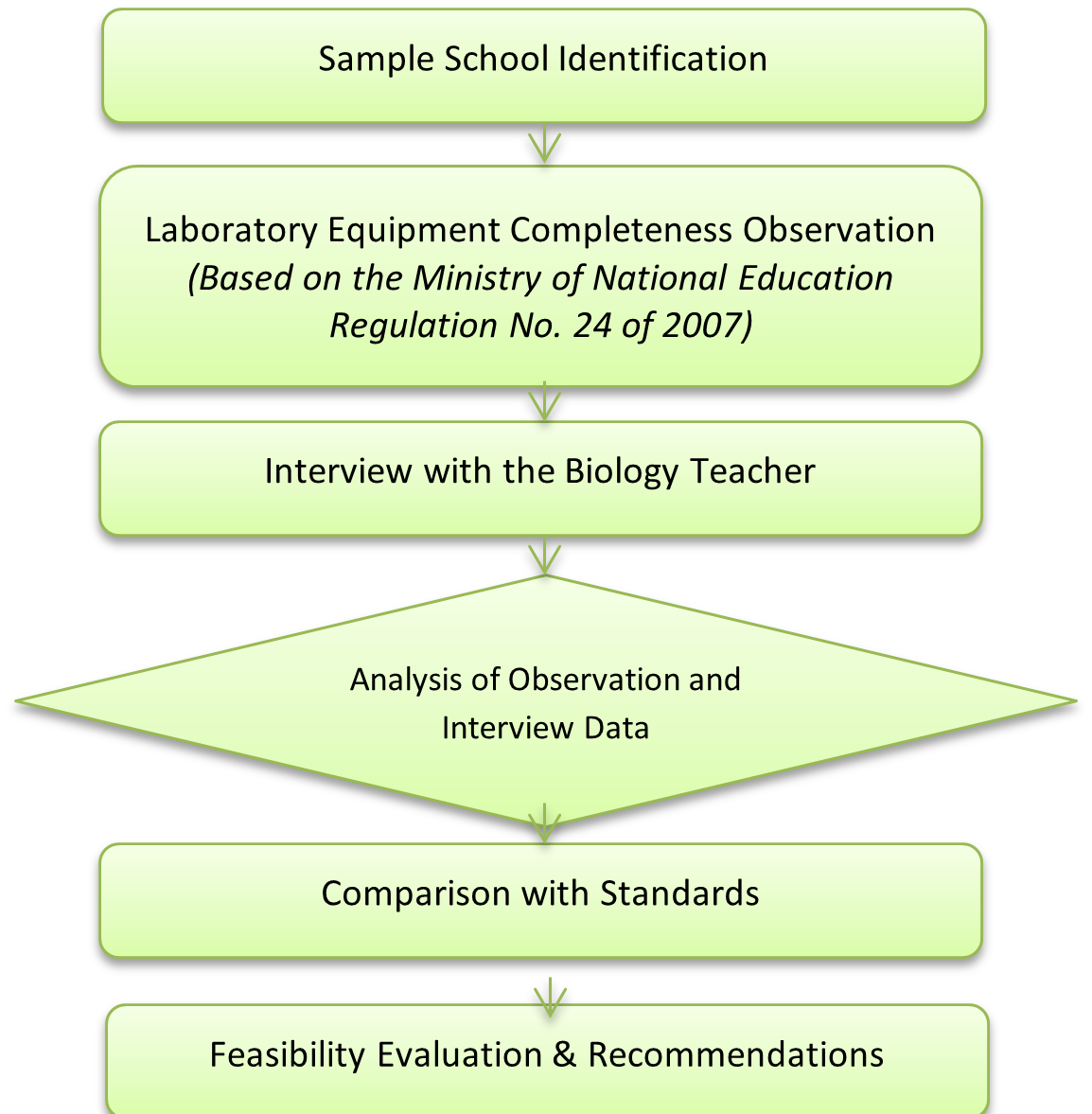
Practical activities are an inseparable part of biology learning, because through practical work, students will prove concepts or theories that have been obtained through a series of experimental processes so that they can support students in understanding learning materials. The existence of a biology laboratory that supports the success of the biology teaching and learning process must of course meet the minimum requirements for the establishment of a laboratory related to the completeness of tools and facilities in accordance with the standards of educational facilities and infrastructure. The purpose of this study was to analyze the completeness of the chemistry laboratory at SMA Negeri 1 Alalak. Laboratory analysis based on standard facilities and Permendiknas RI No. 24 of 2007. The method used in this research is the descriptive method with a quantitative approach. The school subjects used in this study were SMA Negeri 1 Alalak. The results of the analysis of the completeness of the chemical laboratory at SMA Negeri 1 Alalak showed that 85.8% of the furniture used for practicum was available in the laboratory, while the suitability of the equipment used was 78.2%. For consumables stored in the laboratory as a whole by existing standards (100%), and as much as 100% of other available equipment, so the analysis results show that the chemical laboratory equipment owned by SMA Negeri 1 Alalak is by the standard of facilities. and laboratory infrastructure in this case Permendiknas RI No. 24 of 2007.
Abstrak. Kegiatan praktikum merupakan bagian yang tak terpisahkan dalam pembelajaran biologi, karena melalui praktikum peserta didik akan membuktikan konsep atau teori yang sudah didapat melalui serangkaian proses percobaan sehingga dapat menunjang peserta didik untuk memahami materi pembelajaran. Keberadaan laboratorium biologi yang mendukung keberhasilan proses belajar mengajar biologi tentu harus memenuhi syarat minimal berdirinya laboratorium terkait kelengkapan alat dan sarana sesuai dengan standar sarana dan prasarana pendidikan. Tujuan penelitian ini adalah menganalisis kelengkapan laboratorium Biologi di SMA Negeri 1 Alalak. Analisis laboratorium berdasarkan standar sarana dan prasarana dan Permendiknas RI No. 24 Tahun 2007. Metode yang digunakan dalam penelitian ini adalah metode deskriptif dengan pendekatan kuantitatif. Subjek sekolah yang digunakan dalam penelitian ini adalah SMA Negeri 1 Alalak. Hasil analisis kelengkapan laboratorium biologi di SMA Negeri 1 Alalak menunjukkan bahwa perabot yang digunakan untuk praktikum tersedia di laboratorium sebesar 85,8%, sedangkan kesesuaian peralatan yang digunakan sebesar 78,2%. Untuk bahan habis pakai yang tersimpan di laboratorium secara keseluruhan sesuai dengan standar yang ada yaitu 100%, dan sebanyak 100% dari peralatan lain yang tersedia, maka hasil analisis menunjukkan bahwa peralatan laboratorium biologi yang dimiliki SMA Negeri 1 Alalak sudah sesuai dengan standar sarana dan prasarana laboratorium dalam hal ini Permendiknas RI No. 24 Tahun 2007.
Referensi
Ahmad, E. P. A., & Nur, R. A. (2024). Eksplorasi penggunaan laboratorium virtual sebagai alternatif praktikum dalam pembelajaran biologi. Binomial: Journal of Teaching and Learning Mathematics, 7(2), Artikel 2411. https://doi.org/10.46918/bn.v7i2.2411
Arfiana, K., & Fanika, N. (2023). Implementasi program kesehatan dan keselamatan kerja (K3) dalam penggunaan laboratorium IPA. Edulab: Majalah Ilmiah Laboratorium Pendidikan, 8(1), 74–93. https://doi.org/10.14421/edulab.2023.81.06
Creswell, J. W., & Creswell, J. D. (2018). Research design: Qualitative, quantitative, and mixed methods approaches (5th ed.). Thousand Oaks, CA: SAGE Publications. https://doi.org/10.4135/9781506389216
Basri, A. A., Fitri, N., & Arganata, F. Z. (2023). Pelatihan Penggunaan APAR untuk Meningkatkan Kemampuan Penggunaan APAR untuk Kesiapsiagaan Kebakaran pada Civitas Akademik di Poltekkes Malang Tahun 2023. Jurnal Pengabdian Masyarakat Berkemajuan, 7(4). https://doi.org/10.31764/jpmb.v7i4.19617
Elesio, J. (2023). Science laboratory environment and students' motivation as predictors on attitudes towards chemistry lesson. International Journal of Research and Innovation in Social Science, 7(5), 123–130. https://doi.org/10.47772/IJRISS.2023.7501
Farikha, Y., Sari, D. P., & Wijayanti, R. (2021). Analisis kelengkapan fasilitas sarana dan prasarana laboratorium biologi di SMA Negeri se-Kabupaten Grobogan. Jurnal Sinkesjar, 1(1), 743–751. https://doi.org/10.29407/seinkesjar.v1i1.1306
Herlina, L., & Gultom, E. (2023). Pengaruh kelengkapan laboratorium terhadap literasi sains siswa. Jurnal Edukasi Biologi, 11(2), 102–109. https://doi.org/10.58939/afosj-las.v3i2.595
Lestari, H. P., & Supahar. (2020). Effect of science virtual laboratory combination with demonstration methods on lower-secondary school students’ scientific literacy ability in a science course. Heliyon, 6(12), e05826. https://doi.org/10.1016/j.heliyon.2020.e05826
Maulida Ivana Sari, Khairunnisa, R., Messy, M., Rahmawati, S. A., Saifuddin, M. F., & Puspitasari, E. D. (2022). Biosafety pada laboratorium biologi sekolah menengah atas se-Kota Yogyakarta. Bioeduca: Journal of Biology Education, 4(2), 105–112. https://doi.org/10.21580/bioeduca.v4i2.12366
Melisa, M., & Silalahi, M. V. (2024). Analisis standarisasi laboratorium biologi di SMA Negeri 6 Pematangsiantar. MASALIQ, 4(4), 881–893. https://doi.org/10.58578/masaliq.v4i4.3309
Mendez, M. J. R., & Senining, E. M. B. (2023). Science Laboratory Learning Environment and Students’ Practices on Laboratory Safety. SEAQIS Journal of Science Education, 3(2), 31–42. https://doi.org/10.58249/sjse.v3i02.113ERIC+2
Nasution, I. W., & Nasution, N. H. (2024). Pemanfaatan laboratorium biologi untuk meningkatkan keterampilan ilmiah siswa SMA. Jurnal Pendidikan Biologi, 7(2), 1642–1648. https://jurnal.uisu.ac.id/index.php/best/article/view/10246
Nasution, R. (2020). Analisis kelengkapan fasilitas laboratorium dan pemanfaatan laboratorium biologi di kelas XI SMA Negeri 1 Aek Natas T.P. 2020/2021 (Undergraduate thesis, Universitas Negeri Medan). Retrieved from https://digilib.unimed.ac.id/id/eprint/41665/
Ranza, N., Harahap, F., & Zega, N. (2024). Analisis standarisasi sarana prasarana laboratorium biologi dan pelaksanaan praktikum di SMA se-Kecamatan Rantau Selatan [Abstract]. Al Qalam: Jurnal Ilmiah Keagamaan dan Kemasyarakatan, 18(6). https://doi.org/10.35931/aq.v18i6.4141
Rauteda, K. R. (2025). Quantitative research in education: Philosophy, uses and limitations. Journal of Multidisciplinary Research and Development, 2(1), 1–11. https://doi.org/10.56916/jmrd.v2i1.993
Santos, J., Abad, M., & Chaves, L. (2019). Evaluation of science laboratories on academic engagement. International Journal of Research and Innovation in Social Science, 3(1), 45–50. https://doi.org/10.47772/IJRISS.2019.3101
Simanjuntak, N. D. P., Rohiat, S., & Elvinawati. (2017). Hubungan antara sarana laboratorium terhadap keterampilan proses sains siswa. ALOTROP: Jurnal Pendidikan dan Ilmu Kimia, 1(2), 102–105. https://ejournal.unib.ac.id/index.php/alotropjurnal/article/view/3511
Sinta, I. M. (2019). Manajemen sarana dan prasarana. Jurnal Isema: Islamic Educational Management, 4(1), 77–92. https://doi.org/10.15575/isema.v4i1.5645
Suryana, I., Nurhaliza, S., Nisa, S., Helvira, H., Andriani, H., & Fajarwati, S. (2024). Laboratorium sebagai pusat sumber belajar. Journal of Law, Administration, and Social Science, 4(5), 719–727. https://doi.org/10.54957/jolas.v4i5.878
Slavin, R. E. (2018). Educational psychology: Theory and practice (12th ed.). Boston, MA: Pearson.
Wardila, M. (2022). Pengaruh penggunaan laboratorium terhadap keterampilan proses sains siswa pada materi organisasi kehidupan. Jurnal Pendidikan dan Pembelajaran IPA, 9(3), 234–242. Retrieved from https://repository.ar-raniry.ac.id/id/eprint/34345/
Unduhan
Diterbitkan
Terbitan
Bagian
Lisensi
Hak Cipta (c) 2025 Nurul Aulia, Lutfiana Nurtamara, Laila Munada, Muhammad Rifani Arsyad, Ni Komang Ayu Purwanti, Rumaisha Zahra Hanifa Rokhima

Artikel ini berlisensiCreative Commons Attribution-NonCommercial-ShareAlike 4.0 International License.

This work is licensed under a Creative Commons Attribution-NonCommercial-ShareAlike 4.0 International License.